Şirince: The Aegean Village That Changed Name and People
Şirince, an old Greek village near Selçuk: the Çirkince name, the 1923 population exchange, the churches of St Demetrios and St John, and its wine.
Şirince is a mountain village in the Selçuk district of İzmir, about eight kilometres from the town of Selçuk. Today it is known for its stone houses, steep narrow lanes and its Greek churches, but the village's real story lies elsewhere: its name changed, and in 1923 its people changed. Before the population exchange, according to some sources, this was a Greek town of about eighteen hundred households.
To understand Şirince it is not enough to say "an old village"; one has to ask which old, and old for whom. This article brings together what sources say about the village's name, population, churches and wine, and it marks clearly the places where the sources disagree.
At a glance
- Location: Selçuk (İzmir); about 8 km from the centre of Selçuk, at roughly 330–350 m above sea level (sources give different values).
- Earlier names: Kırkınca, Çirkince; Şirince from 1926.
- Earlier inhabitants: Greek Orthodox. They left in the 1923 population exchange; in their place, exchange settlers from the Kavala area were settled.
- Buildings: Stone houses and two main churches (St Demetrios and St John the Baptist); declared an urban conservation area in 2007.
- Economy: Agriculture (olives, peaches, wine) and tourism.
- Closeness to Ephesus: About 8 km from Ephesus.
History
The story of the name
The village's original name is Kırkınca. The name is said to be linked to forty people who fled to the mountains in a legendary age. In Greek speech it turned into the forms Kirkice, Kirkince and finally Çirkince. On the instruction of the governor of İzmir, Kazım Dirik, the name was changed to Şirince; the change took place in 1926.
A different story about the village's founding is also in circulation: that the village was founded by freed Greek slaves. This is only a story; no supporting document is cited, so it should not be read as a historical fact.
The Ottoman period: a Greek village
The records that have been compiled show the village's size step by step. An Ottoman record of 1650 lists 18 taxpayers in "Cirkince", all of them Orthodox Christians. The English clergyman Edmund Chishull visited the village in 1699 and wrote that the whole population was Christian. In 1832–1833 Arundell counted at least 300 houses and estimated the population as "probably fifteen hundred people". The yearbook (salname) of 1908/1909 recorded more than 1,000 houses, all of them Greek Orthodox. These records use different measures (taxpayers, houses, people), but they still show that the village grew from the 17th century to the early 20th century. The Turkish Wikipedia, Hürriyet and Cumhuriyet, on the other hand, speak of a Greek town of about 1,800 households in the 19th century and stress its export-oriented fig production. Household numbers vary from source to source.
The village developed after Ephesus was abandoned in the 15th century, and most of today's buildings date from the 19th century. It is noted that there has been settlement in the area since the Hellenistic period, and that pottery finds collected in 2001–2002 also point to seven village and nine farm settlements in the surroundings.
According to a view reported in the Turkish Wikipedia from Sevan Nişanyan, however, there was a Greek village here in the 14th or 15th century; it was then abandoned and in the 18th century was resettled by Greeks who came from southern Albania. According to the same source, these Greeks spoke Turkish from the start, and the influence of the Berat region can be seen in the architecture. This is the view of a single researcher; it has not been confirmed in another source.
1919–1923: the population exchange
Ottoman rule lasted until 1919; in 1919–1922 the region was under the control of the Greek army. In 1923, with the Turkey–Greece population exchange, the Greek population of Şirince left. Most of the Greeks settled in Nea Efesos near Katerini; exchange settlers from the villages of Müştiyan (Moustheni) and Somokol (Domatia) in the Kavala area were settled in the village. Hürriyet writes that the new inhabitants came from a tobacco region, and that because of this the village's economy of viticulture, winemaking and olive growing up to then was disrupted for a while. According to the same source, the village's population, 2,000–3,000 in the 1950s, later fell to around 700; families gradually moved to Selçuk. In 1941 the Şirince municipality was abolished and the settlement reverted to village status.
A master's thesis written at İstanbul Bilgi University treats Şirince as a "deep-rooted witness" of the population exchange: it examines how those who left the village experienced the departure, how the newcomers settled in and adapted, and how the village has changed through ethno-tourism. Sabahattin Ali's short story Çirkince also describes the village before and after the exchange.
Wine and tourism
The wine story is not as one-sided as often assumed. Hürriyet says that viticulture and winemaking were part of the village economy before the exchange too, and that they were disrupted by the newcomers; this source does not support the view that wine was started by the families who came in the exchange. Şirince's present wine reputation is more recent: according to a student project at Bilkent University, the main reason for it is Helmut Hermann Krauss, of German origin, who came to the village as a tourist in 1998. Impressed by the villagers in the area making wine, Krauss invested and put production on a systematic footing. This is a student project, not a peer-reviewed publication; the details should be read with caution.
There are also concrete dates for tourism: Şirince began to become known in the 1990s; since 2002 the number of accommodation facilities has risen by about 500 percent. In December 2012 the village made the news as a "safe zone" for the end of the world predicted by the Maya calendar; about 150 police and gendarmerie personnel and 270 members of the press came to the region. Instead of the expected rise in visitors, even a decline was observed.
What to see
The fabric of the village
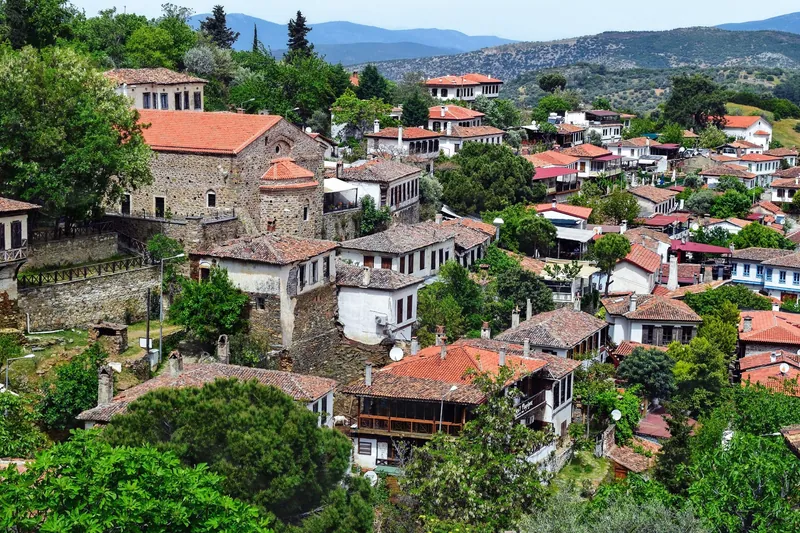
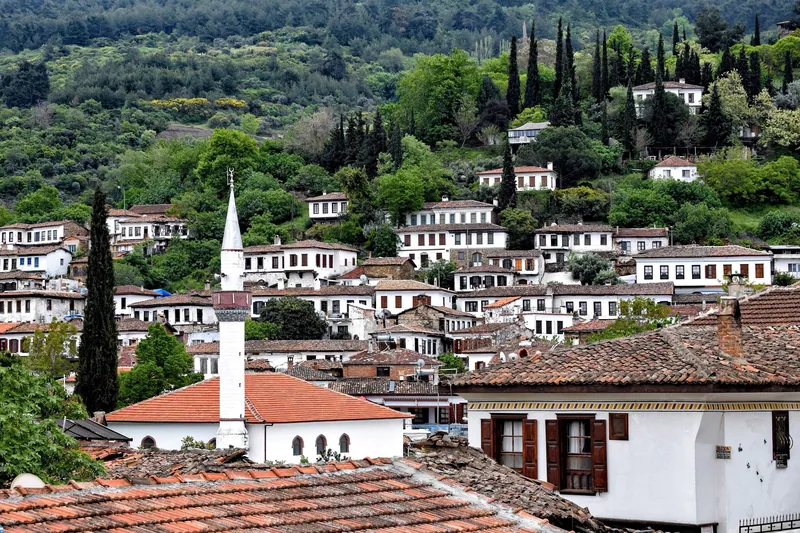
Şirince is built on a slope; stone houses, tile roofs and narrow steep lanes make up the village's silhouette. It is said that no house blocks the view of another. It was registered as an urban conservation area in 2007.
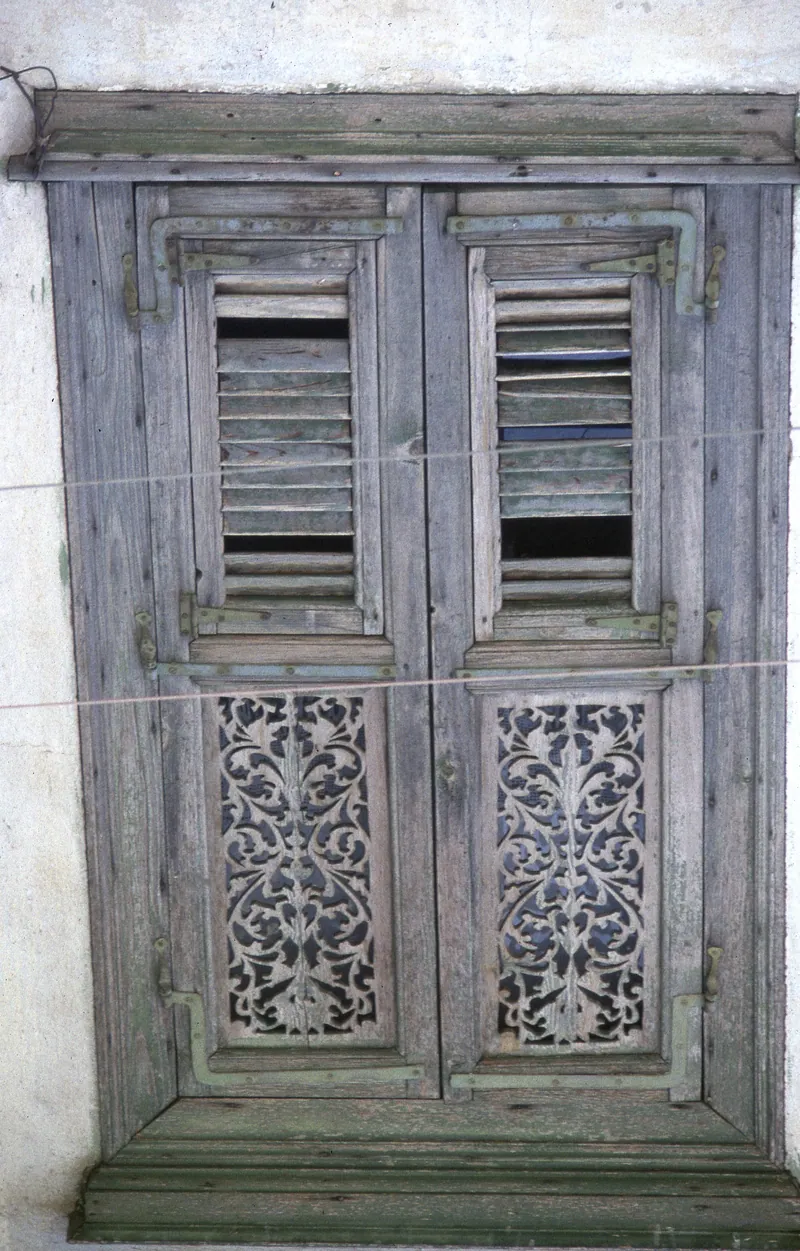
An archive photograph taken in 1992 shows a village house with carved wooden shutters.
The churches
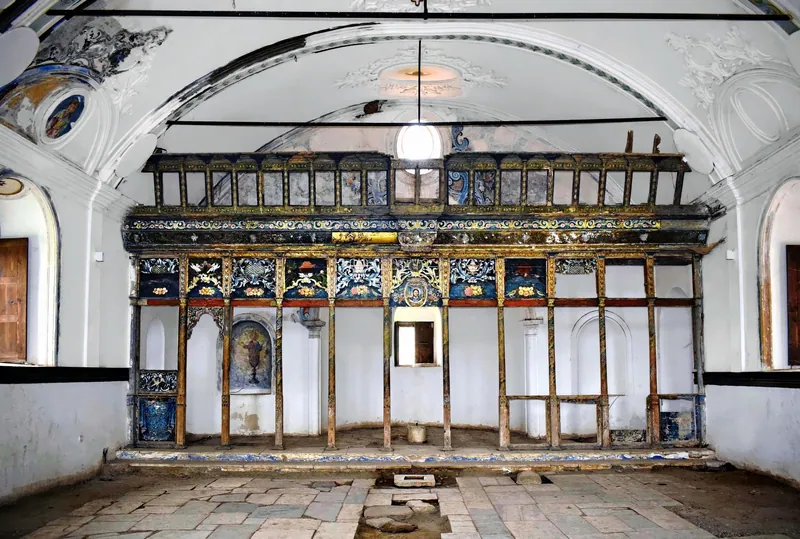
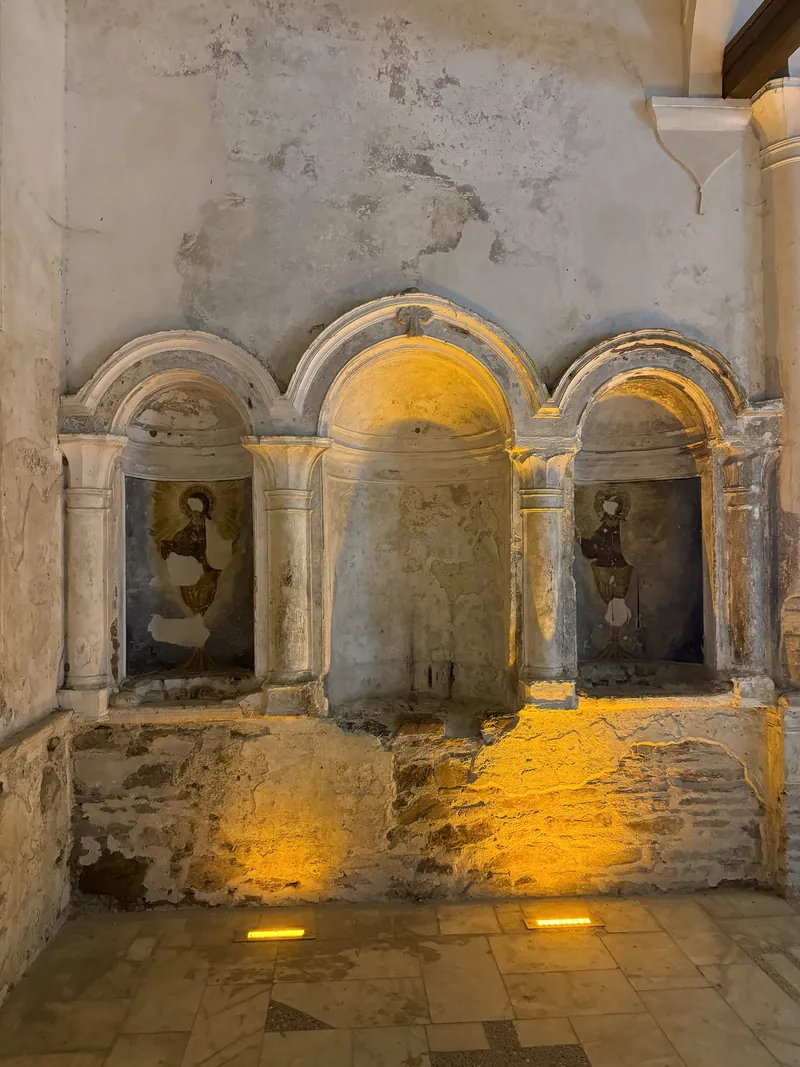
The main historic buildings are the churches of St Demetrios and St John the Baptist; the churches at the two ends of the village attract visitors' interest most. Merve Şen's 2021 master's thesis at Trakya University writes that there are three churches in the village, one of which has vanished and one of which had its function changed after the exchange; the thesis also notes that the interior decoration is considered original compared with the churches in and around Selçuk. The same thesis argues that the buildings have been restored but need rescue work again.
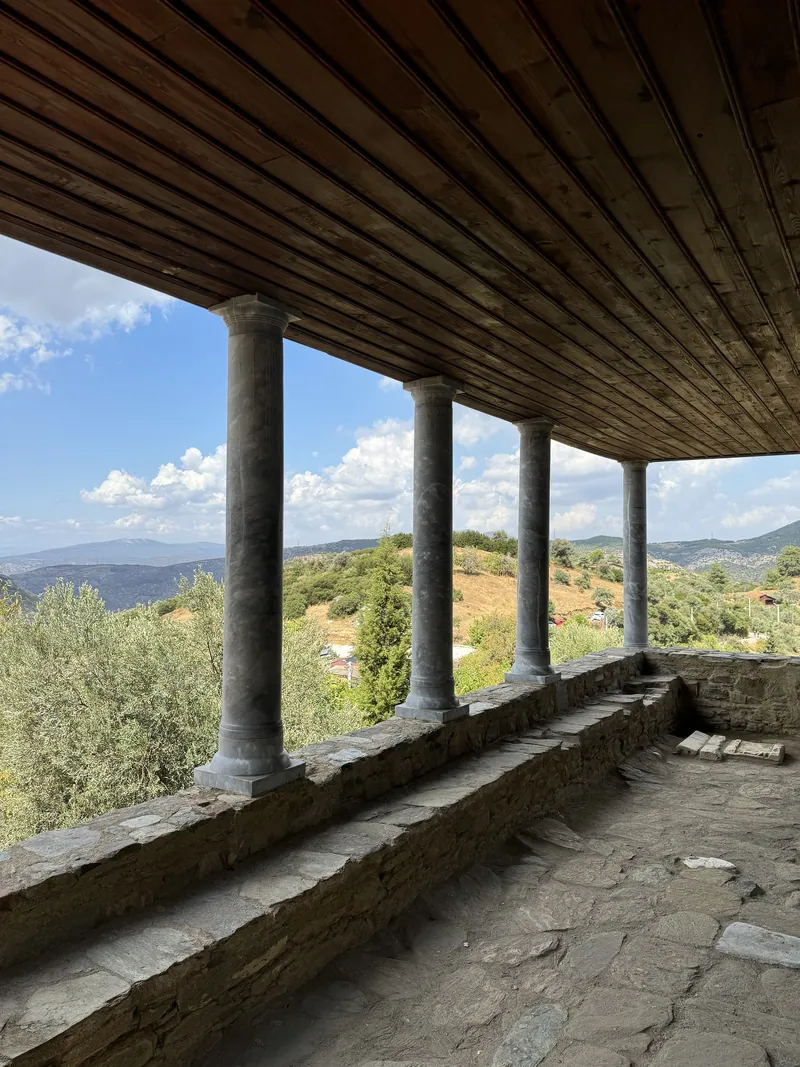
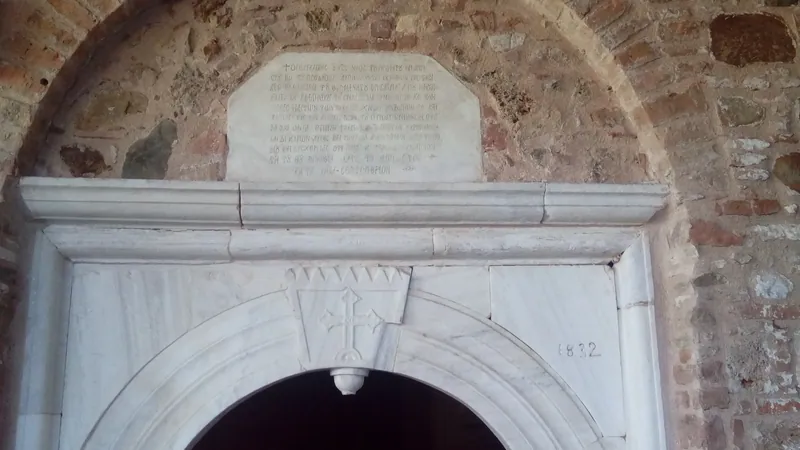
On the marble doorway of the Church of St John the Baptist a Greek inscription and the date 1832 can be read.
On the route
Şirince is the third story on the Aegean Coast route. The previous stop on the route is the Belevi Mausoleum and the next is the Temple of Artemis; then come Ephesus and the House of the Virgin Mary.
Frequently asked questions
What was Şirince's old name?
According to the sources, Kırkınca, Kirkince and Çirkince. The name was changed to Şirince in 1926; the change is reported to have been made on the instruction of the governor of İzmir, Kazım Dirik.
Who used to live in Şirince?
Greek Orthodox people. The 1650 record shows 18 taxpayers, and the 1908/1909 yearbook more than 1,000 houses, all of them Greek Orthodox. They left in the 1923 population exchange.
Who came to the village after the exchange?
Exchange settlers from the villages of Müştiyan (Moustheni) and Somokol (Domatia) in the Kavala area.
Did Şirince wine start with the population exchange?
The sources we have do not support this. Hürriyet writes that viticulture and winemaking were part of the village economy before the exchange too, and that they were disrupted by the newcomers. A student project describes Şirince's present wine reputation as linked to investments made after 1998.
How many churches are there in Şirince?
Hürriyet mentions two churches (at the two ends of the village); the Trakya University thesis writes that there were three churches in the village, one of which has vanished.
Sources
- Wikipedia (English): Şirince
- Wikipedia (Turkish): Şirince
- Küre Ansiklopedisi: Şirince Köyü (Turkish encyclopaedia; Şirince Village)
- Hürriyet Seyahat: Ege'nin şirini Şirince (Turkish travel feature)
- Cumhuriyet: Şirince'de bir gün: Doğa, şarap ve tarih (Turkish column; A day in Şirince: nature, wine and history)
- Merve Şen, Şirince kiliseleri, master's thesis, Trakya University, 2021 (The Churches of Şirince; in Turkish)
- Coşku Çadırcıoğlu, Mübadele'nin köklü şahidi: Dağlardaki Efes, Kırkınca, Çirkince, Şirince..., master's thesis, İstanbul Bilgi University, 2020 (A deep-rooted witness of the exchange; in Turkish)
- Acar et al., Alman bir şarap uzmanıyla ünlenen köy: Şirince, student project, Bilkent University, 2020 (The village made famous by a German wine expert; in Turkish)