Pigeon Island (Güvercinada): Who Built the Castle?
Pigeon Island Castle in Kuşadası: Barbarossa or the Genoese? The walls' 1820s inscription, the origin of the name and the birth of Kuşadası.
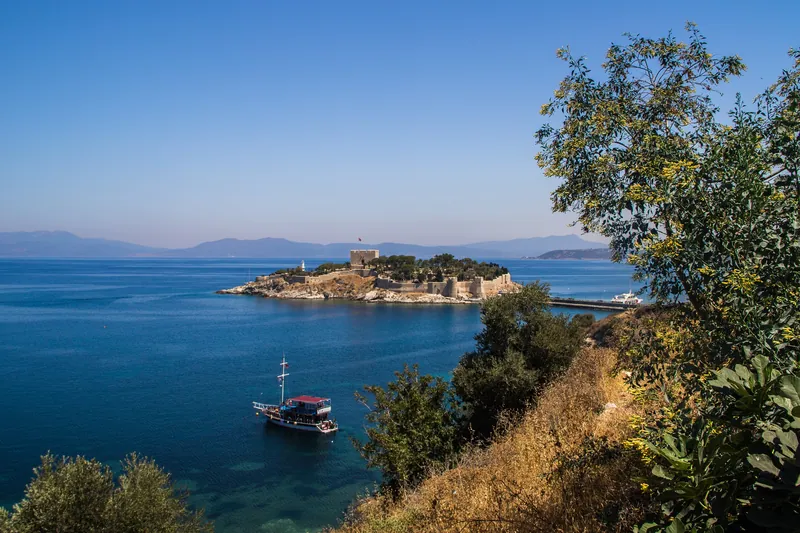
Güvercinada, or Pigeon Island, is a small island at the mouth of the Gulf of Kuşadası, joined to the shore by a causeway. The castle on it is the emblem of the town, but who built it varies from source to source. One source attributes the castle to Barbaros Hayreddin Pasha (Barbarossa) in the 1530s, another to the Genoese in the late 13th or early 14th century. The date of the walls is a separate question.
This article tells the story of the island and the castle without hiding the places where the sources do not agree. Kuşadası itself is part of this story: in antiquity the town was a small port in the shadow of Ephesus.
At a glance
- Location: Hacıfeyzullah neighbourhood, Kuşadası district, Aydın; an island in the Gulf of Kuşadası.
- Size: About 0.02 km², 245 m from east to west, with its highest point 8 m above sea level.
- Name: The name comes from the pigeons that took shelter on the island.
- Link to the mainland: Joined to the shore in 1957 by a causeway (Küre Ansiklopedisi: a breakwater).
- Castle: Its construction is attributed, depending on the source, to the Genoese or to Barbaros Hayreddin Pasha in the 1530s; the walls belong to a separate phase, in the 1820s or earlier.
- UNESCO: In 2020 it entered the tentative list dossier titled "Trade Centres and Walls on the Genoese Trade Routes from the Mediterranean to the Black Sea".
History
Whose castle?
There are two different accounts, and both should be read together with the source that names them.
The Barbarossa account. According to Küre Ansiklopedisi, the castle was built in the 1530s by the Ottoman admiral Barbaros Hayreddin Pasha, and because of its strategic position commanding the bay it was meant as a defence against threats from the sea. The English Wikipedia also writes that the inner castle was built by Barbaros Hayreddin (about 1478–1546).
The Genoese account. The Turkish Wikipedia says that the castle was built by the Genoese after they came to Kuşadası, in the late 13th or early 14th century, and gives no more precise date. Duvar's report of 2020 announcing the island's entry on the UNESCO tentative list also dates the castle to the late 13th–early 14th century; it writes that the structure is thought to have been strengthened in the Ottoman period, but does not say who built it. The Genoese link comes up in the report only through the title of the application.
The sources we have do not reconcile these two accounts. The English Wikipedia's article on Kuşadası, on the other hand, writes that the castle and garrison on the island were rebuilt and enlarged in 1834, which suggests that the castle had more than one phase.
The walls
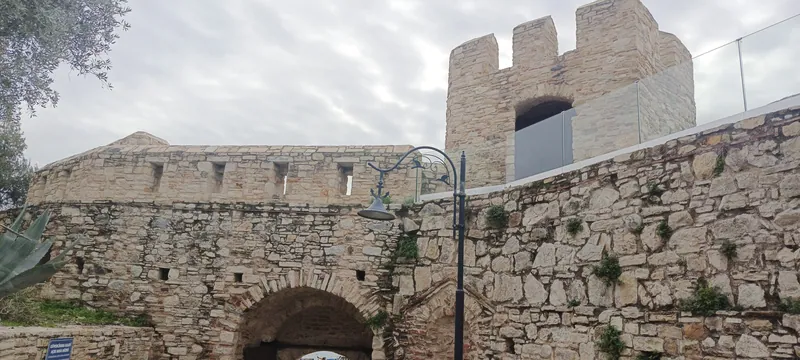
For the walls, Küre Ansiklopedisi gives a date: they were built in the 1820s, during the Morea Revolt, by İlyas Ağa, the mütesellim (deputy governor) of the Sığla Sanjak. The construction inscription is on the tower in the north and is dated 1242 AH (1826). The English Wikipedia, on the other hand, writes that the outer walls were built against a possible attack from the islands during the Orlov Revolt in Greece (1770), and adds that the inscription on the north tower is also dated 1242 AH (1826). So for the date of the walls there are two different reasons and a range between 1770 and 1826. The walls are about 3 m high and surround the island completely; the stone was brought from Yılancıburnu.
The birth of Kuşadası
The history of Güvercinada is tied to the history of Kuşadası. According to the English Wikipedia, in antiquity Kuşadası was a small port where trading ships on the coast put in, and it remained in the shadow of Ephesus until the harbour of Ephesus filled up. When Byzantine, Venetian and Genoese sailors began trading on the coast, the port was refounded under the name Scala Nova ("new port"), a garrison was placed on the island, and the centre of the town moved from the slope to the shore. The same article writes that the name was Ephesus Neopolis in the Byzantine period and Scala Nova/Scala Nuova in the Frankish period, and that the Ottoman-period name "Kuş Adası" was adopted in the early 20th century. It adds that the name comes from "kuş" (bird) and "ada" (island), and that Güvercinada looks like a bird's head when seen from the sea; the name "pigeon", according to the Turkish Wikipedia, rests on the pigeons that sheltered on the island.
The town also has traces of the Ottoman period: the Kaleiçi Mosque and the Öküz Mehmed Pasha Caravanserai were built in 1618. In the 19th century the İzmir–Selçuk–Aydın railway left the town outside its route and trade declined. Italian, then Greek troops occupied the town; Turkish forces under the command of Mustafa Kemal Atatürk took control on 7 September 1922. In the 1923 population exchange the Greek population went to Greece and founded Nea Efesos. Kuşadası was attached to İzmir until 1957, and in that year passed to Aydın. The island's connection to the mainland was also made in the same year, 1957.
What to see
The inner castle and the towers
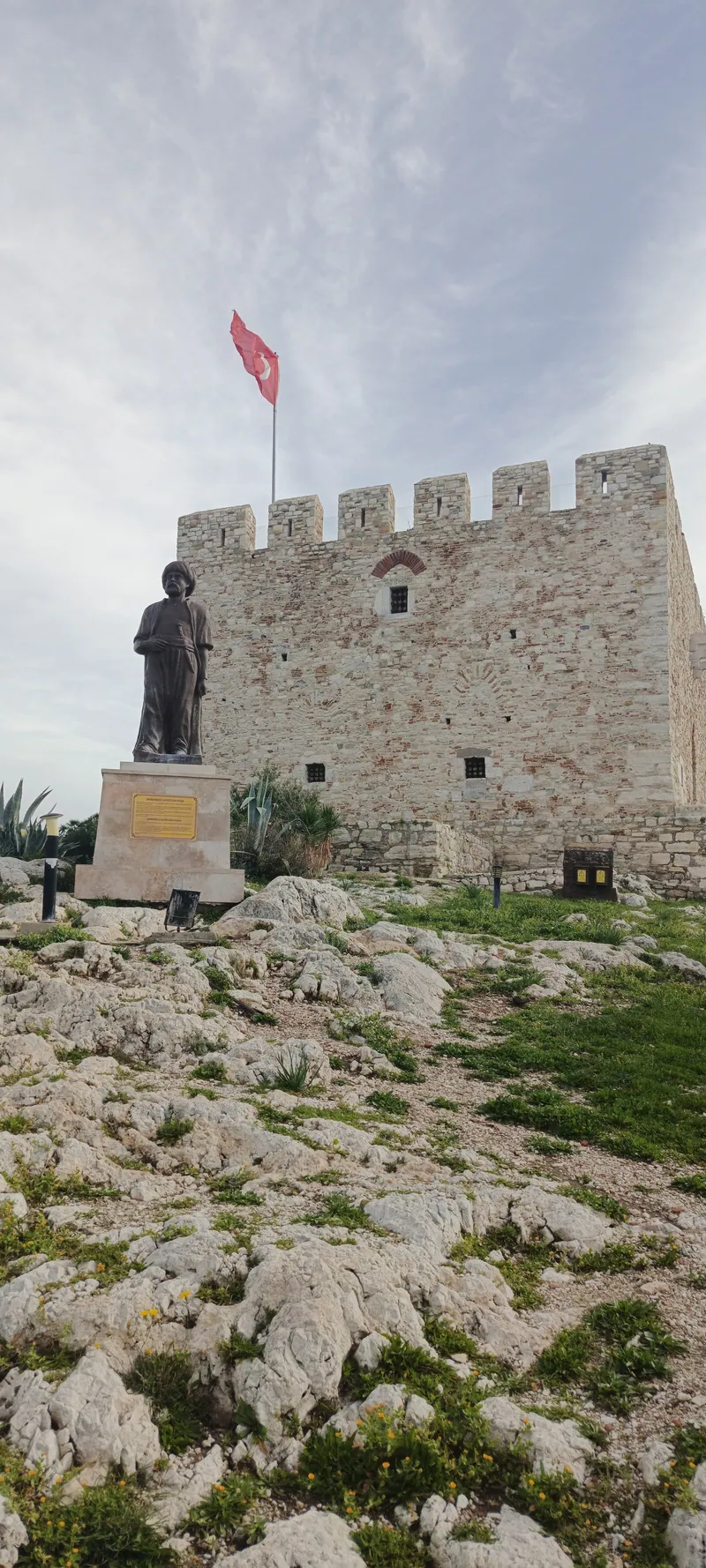
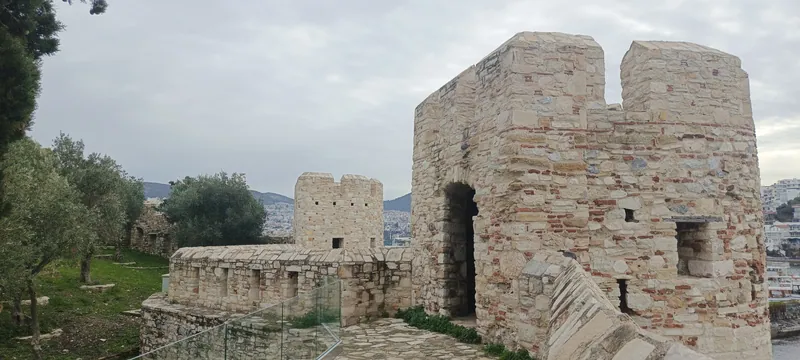
According to Küre Ansiklopedisi, the inner castle in the middle of the island has a square plan (17.35 × 15.70 m) and is covered by a barrel vault; its main entrance is on the south façade; cannon embrasures face three directions (north, south and west), and there are stairs to the upper floor in the east. The towers of the walls: a cylindrical one in the south, two pentagonal ones in the north, and two quadrangular ones in the northeast and northwest. The English Wikipedia further writes that the gate of the walls faces east and is flanked by two towers, pentagonal in the north and cylindrical in the south.
Cannons and the view
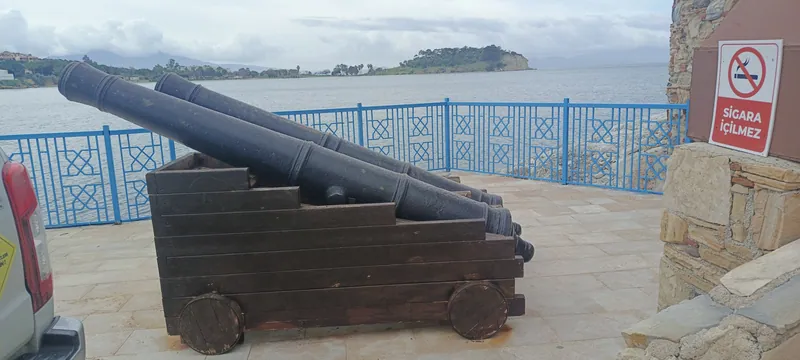
The bay can be seen from the embrasures in the walls; old cannons stand on the site.
The island and the shore
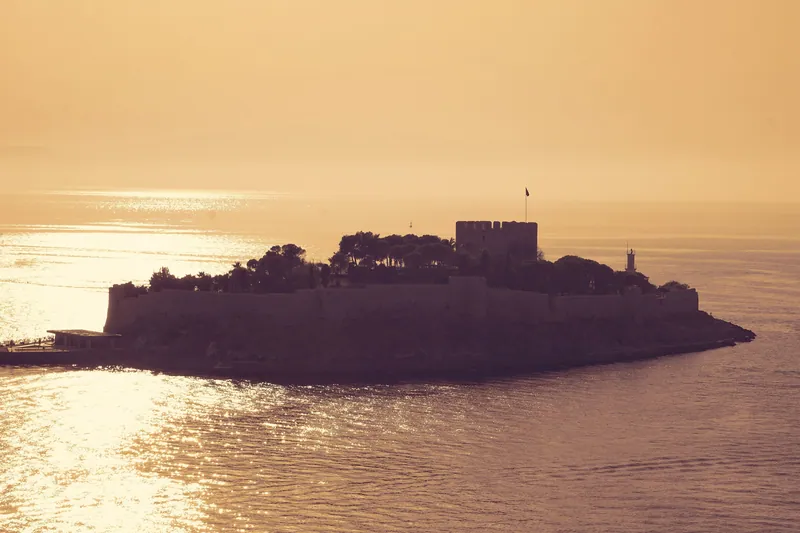
The castle was damaged by earthquakes and underwent a comprehensive restoration; the work was completed in 2016 and the castle was opened to visitors. The restoration added exhibition areas with glass floors, a small museum section, a cistern, a lighthouse and a statue of Barbaros Hayreddin Pasha to the site. Looking at the island from the shore, you see an island that has turned into a small peninsula.
On the route
Pigeon Island is the seventh story on the Aegean Coast route. The previous stop is the House of the Virgin Mary and the next is Priene; between the two lies the route's Menderes Plain road story. After that come Miletus and Didyma.
Frequently asked questions
Who built Pigeon Island Castle?
The sources disagree. Küre Ansiklopedisi and the English Wikipedia attribute it to Barbaros Hayreddin Pasha (1530s); the Turkish Wikipedia and Duvar's report date it to the late 13th–early 14th century, to the Genoese. As for the walls, according to Küre İlyas Ağa built them in the 1820s.
What does the name mean?
"Pigeon island". The island takes its name from the pigeons that took shelter on it. The name of Kuşadası comes from "kuş" (bird) and "ada" (island); the English Wikipedia writes that the island looks like a bird's head from the sea.
When was the island joined to the mainland?
In 1957. The Turkish Wikipedia speaks of a causeway 210 m long, the English Wikipedia of a causeway 350 m long; the sources differ on the length.
Is Pigeon Island on the UNESCO list?
Not on the World Heritage List, but on the tentative list. According to Duvar's report, the mayor of Kuşadası, Ömer Günel, announced this on 29 May 2020 and described it as a "first step".
Sources
- Küre Ansiklopedisi: Güvercinada Kalesi (Turkish encyclopaedia; Güvercinada Castle)
- Wikipedia (Turkish): Güvercinada
- Wikipedia (English): Güvercinada
- Wikipedia (English): Kuşadası
- Duvar English: Western Turkey castle from 14th century designated tentative UNESCO World Heritage site (2020)