Metropolis Ancient City: The Mother Goddess's Hilltop Town
Metropolis ancient city in Torbalı, İzmir: a Hellenistic theatre, Roman mosaics, Byzantine cisterns and the story of the town of Meter Gallesia.
The ancient city of Metropolis lies on a hill between the villages of Yeniköy and Özbey, in the Torbalı district of İzmir. The city takes its name from the mother goddess Meter Gallesia and rests its back against Mount Gallesion. The hill holds a theatre, a hall with mosaics, the remains of baths and four cisterns, while the first traces of settlement reach back to the Late Neolithic–Early Chalcolithic period.
What makes Metropolis interesting is how the road and the water shaped the city. It stood on the road between İzmir and Ephesus; the ancient geographer Strabo records that it was one hundred and twenty stadia from Ephesus to Metropolis. Excavations are continuing, and new finds are helping us understand the city's water system and daily life better.
At a glance
- Location: Torbalı, İzmir; about 40 km southeast of İzmir. The hill is known in archaeology as Bademgediği Tepe.
- Name: From the mother goddess Meter Gallesia; it lies at the foot of Mount Gallesion.
- Settlement: Traces of occupation from the Late Neolithic–Early Chalcolithic period down to the Ottoman period.
- Main structures: Hellenistic theatre, bouleuterion (council house), stoa, Roman baths, a hall with mosaics, a house with a peristyle, cisterns.
- Excavation: The start year varies by source (field survey in 1972, excavation from 1989 or 1990; details below); led by Serdar Aybek since 2007.
- Today's Torbalı: The name of the district is described as a form of the name "Metropolis" that changed over time.
History
The Bronze Age: was it Puranda?
Pottery of the Early and Middle Bronze Age has been found on the hill; the earliest traces of settlement go back even further, to the Late Neolithic–Early Chalcolithic period. Bademgediği Tepe is identified with the place the Hittites called "Puranda" in the Late Bronze Age, an identification that rests on the annals of the Hittite king Mursili II. According to the annals, after Apasas (later Ephesus) fell during the Arzawa campaign, those who fled took refuge in Puranda and the resistance was led by Prince Tapalazunauli; when Mursili took the city, Tapalazunauli fled with his family. Mycenaean-style pottery has also come from the hill, and a depiction of a Mycenaean-era ship on one vessel is considered important for the history of ship technology.
The Hellenistic period: a rising city
A Greek settlement on the acropolis was founded after the 9th century BC, and the real development came in the 3rd century BC. In the 2nd century BC, under the rule of the Kingdom of Pergamon, the city grew and gained a theatre, a bouleuterion and a stoa. Strabo mentions the wines of Metropolis, together with those of Ephesus, as "good".
The Roman period: baths, houses, shops
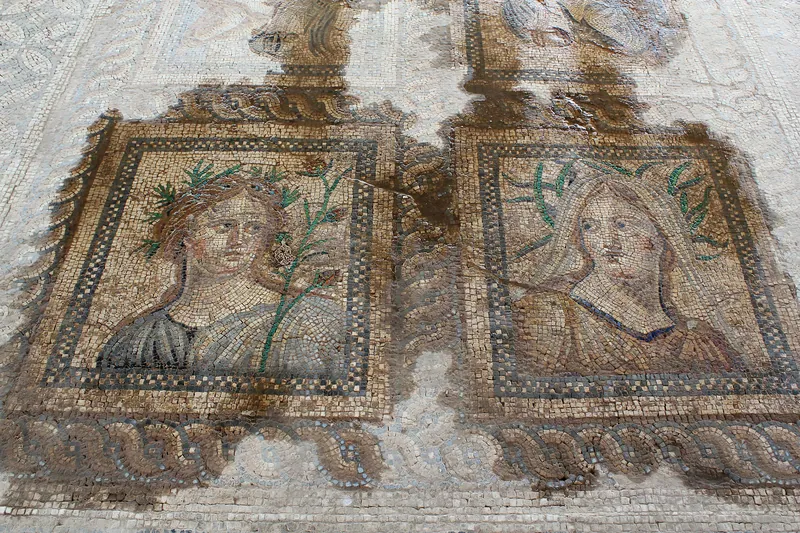
In the Roman period the city grew rich on the trade that came along the İzmir–Ephesus road; wealthy houses with peristyles, workshops, shops, baths and sports complexes were built, especially on the eastern slopes. The Roman structures revealed by the excavations include two baths, a bath-and-palaestra complex, a hall with mosaics, a house with a peristyle, shops, a public latrine and streets. Among the finds presented at the press conference in December 2023 were columns still standing in place, brick shops that have survived upright, a water drainage system designed against flood water, and mosaics in villa floors with female and male figures facing each other.
Late Antiquity and Byzantium: defence by water
Metropolis was a bishopric in Late Antiquity, but it shrank because of wars and economic problems, and a defensive fortress was built inside the city. Byzantine traces include a church east of the city and walls that run around the whole city and join the Hellenistic fortifications of the acropolis.
The most striking find of this period came in 2020. In that year's excavation season, four interconnected cisterns were found on the acropolis under an earth fill about seven metres deep; there had been no trace of them on the surface. The cisterns are almost undamaged, about the height of a three-storey building, and large enough to hold roughly 600 tonnes of water in total. They are thought to have met the city's water needs in the Late Roman period; the excavation team estimates that they supplied the lower city and the bath building above. One reason given for their construction is the defensive needs of the Byzantine age in particular: during a siege, the cisterns on the acropolis, ringed by strong walls, would have met the people's need for water for a long time. The cisterns continued to be used in later centuries: in the 12th–13th centuries AD they are reported to have served as a rubbish dump, yielding food waste, animal bones and glazed pottery. In other words, long after the purpose they were first built for, the cisterns remained part of the townspeople's daily life.
Finds have continued in recent years. In June 2021 a marble statue of a standing woman, about 1,800 years old, with the head and arms missing but well preserved, was announced; in 2025 an agora was uncovered on the city's southern slopes. The agora is thought to have been in use probably until the 5th or 6th century AD, and it may have lost its function after an earthquake. According to the figure announced in 2020, more than 11,000 objects (pottery, coins, glass, architectural fragments, figurines, and objects of bone and ivory) have been recovered in the excavations; they are displayed in the İzmir Archaeology Museum, the İzmir History and Art Museum and the Selçuk Ephesus Museum.
The beyliks and the Ottomans: the shift to Torbalı
From the 14th century AD the region came under the control of the Aydınoğulları Beylik. Metropolis never regained its former position, and the settlement moved to present-day Torbalı; the name Torbalı too is described as a form of the name Metropolis that changed over time. In the Ottoman period the region was for a while called "Kızılhisar".
What to see
The Hellenistic theatre
The theatre is the city's best-known structure. It looks out from the hillside over the village and the mountains.
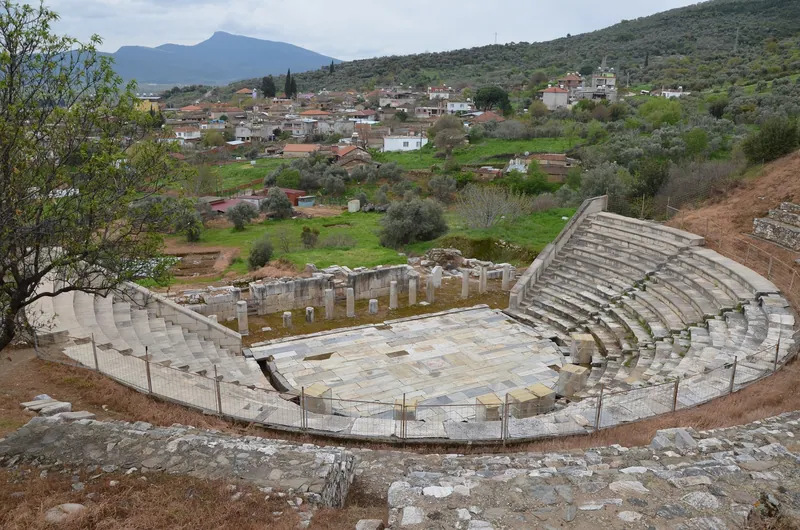
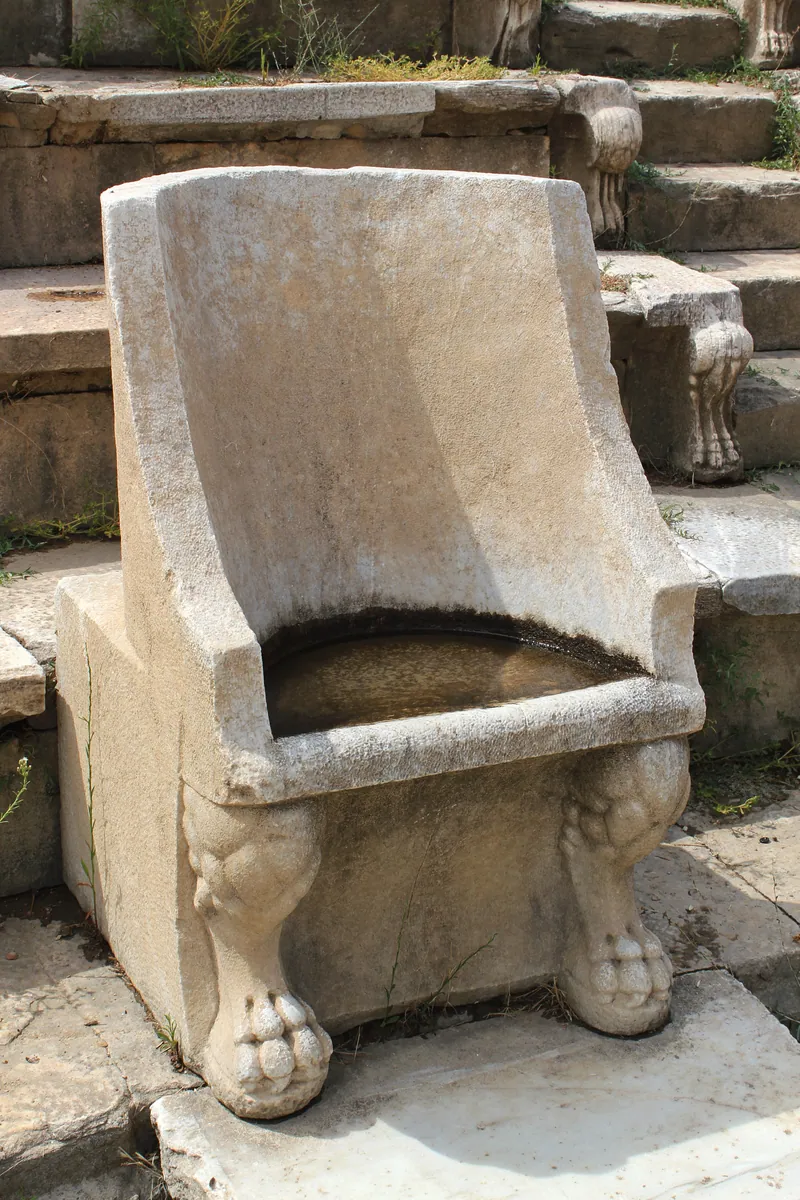
The theatre was restored in 2001. In 1995 a Hellenistic marble seat of honour with a griffin figure was found in the theatre; the original is in the İzmir Archaeology Museum, while a copy stands in the theatre. One of the marble seats you can see on site rests on lion-paw feet.
The bath
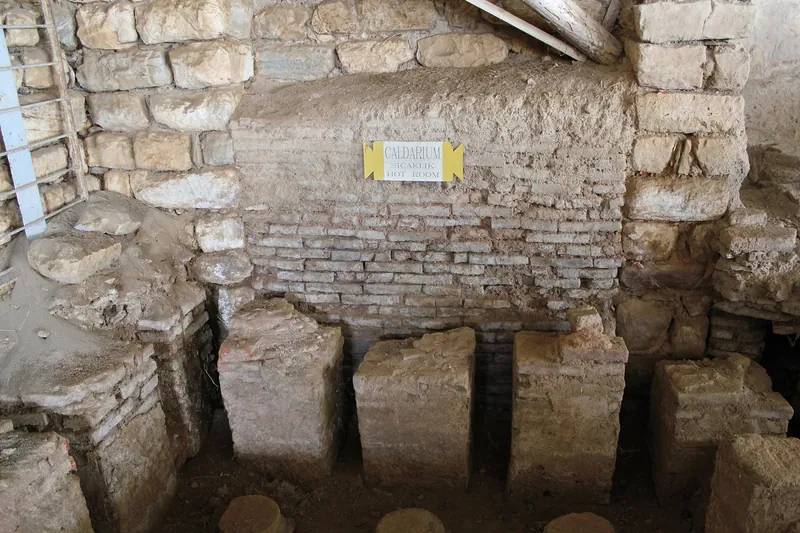
In the hot room (caldarium) of the Roman bath you can see the hypocaust pillars that carry the floor, that is, the small brick columns around which hot air circulated underneath. In 2022 the excavation team found about 150 fragments of amphorae and water jugs in the last two metres of a well, about 12 metres deep, in the bath area. The fragments are about 1,800 years old; according to the excavation director Serdar Aybek's estimate, they broke while water was being drawn and fell into the well. It was the first time that a group of amphorae had been found together at Metropolis.
The mosaics
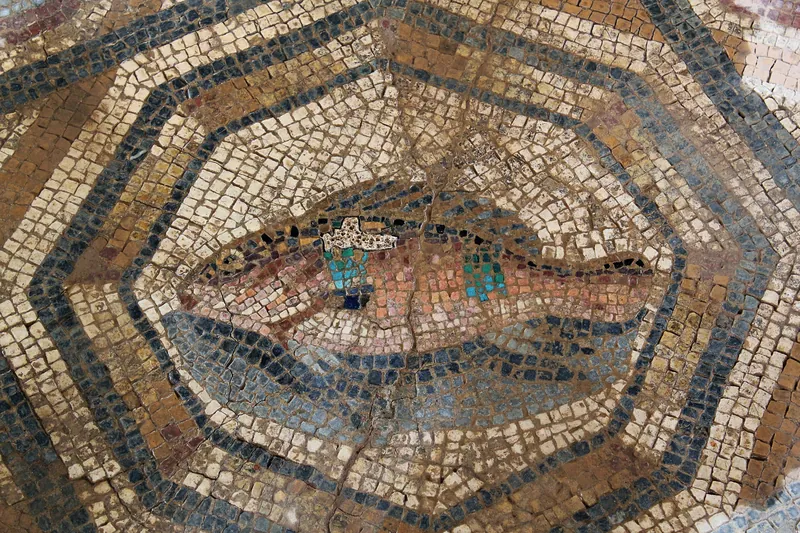
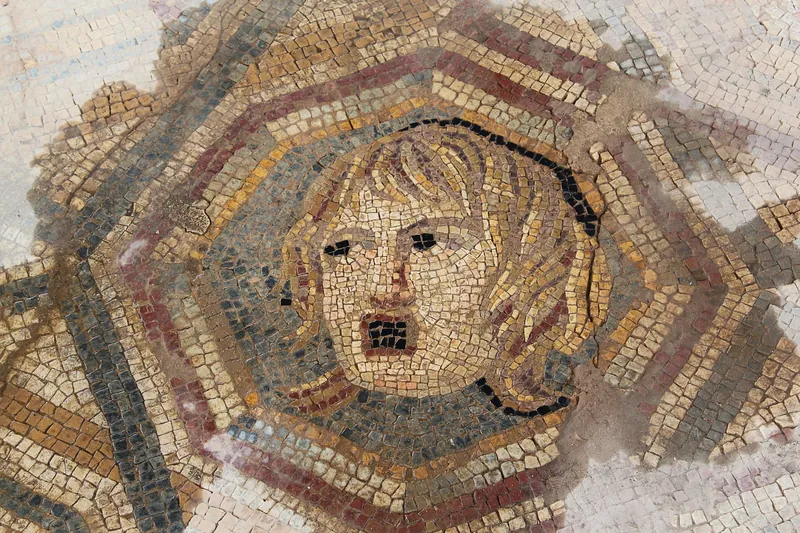
The floors of Roman-period houses and halls were covered with mosaics. Among the city's mosaics are two portrait panels facing each other, fish and bird figures inside octagonal frames, and theatre masks.
The walls
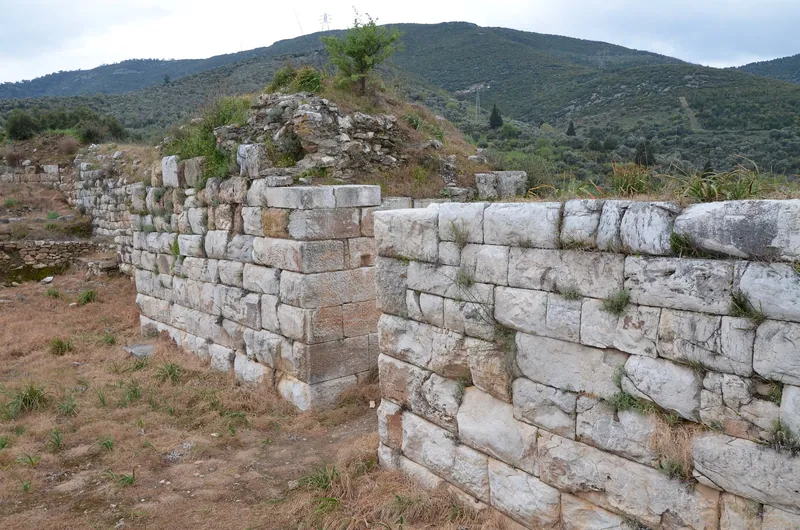
Walls of cut stone can be seen in the city. The city has both the Hellenistic fortifications on the acropolis and the Byzantine walls joined to them; we do not state here which period the wall in the photograph belongs to.
The cisterns
The four cisterns that came to light in 2020 are on the acropolis. The excavation director Serdar Aybek counts these structures, about as tall as a three-storey building, among the best-preserved monuments at Metropolis.
On the route
Metropolis is the first story on the Aegean Coast route, in the direction from İzmir to Didim. The next stop is the Belevi Mausoleum; then come Şirince, the Temple of Artemis and Ephesus. In the opposite direction the route takes you from Metropolis to İzmir.
Frequently asked questions
What does the name Metropolis mean?
The city's name refers directly to the mother goddess: "City of the Mother Goddess". The city takes its name from the mother goddess Meter Gallesia and rests its back against Mount Gallesion.
When did the excavations at Metropolis begin?
Sources give different years. The Turkish Museums website mentions 1989 and writes that the excavation was led by Recep Meriç in 1989–2007 and by Serdar Aybek since 2007. Milliyet writes that the excavations have been going on since 1990. Wikipedia writes that field work under Recep Meriç began in 1972 and that excavation has been going on since 1989. For the exact year, one would need to consult the excavation directorate's publications.
Why are the cisterns so important?
The four cisterns were found on the acropolis under about seven metres of fill, and they hold about 600 tonnes of water. During a siege, especially in the Byzantine period, they may have allowed the people to hold out without running short of water.
Is the city's ancient name known?
Bademgediği Tepe, identified with Puranda in the Hittite texts, may have been known by that name in the Late Bronze Age. The name Metropolis is the name of the Hellenistic and later periods; according to Wikipedia, ancient authors such as Strabo and Ptolemy mention the city.
Sources
- Türkiye Müzeleri: İzmir Metropolis Archaeological Site
- Wikipedia: Metropolis (Anatolia)
- Milliyet: Metropolis Antik Kenti kazılarında birbiriyle bağlantılı dört sarnıç bulundu (Turkish; four interconnected cisterns found at Metropolis)
- Milliyet: Metropolis'te ilk kez toplu halde amfora ve su testileri bulundu (Turkish; amphorae and water jugs found together at Metropolis for the first time)
- Hürriyet Daily News: Ancient Metropolis findings made public
- Strabo, Geography 14.1.2 and 14.1.15 (Thayer, University of Chicago)